
New Insights on Absenteeism Point to Importance of Classroom Belonging
BY Lauren Taylor
Findings by the Consortium on School Research provide insights into sky-high post-COVID chronic attendance issues for Chicago Public Schools.
CHICAGO — In the years following the COVID-19 pandemic, middle and high school attendance rates across Chicago Public Schools have dramatically decreased. New research from the University of Chicago’s Consortium on School Research points to specific, research-backed strategies that can help reverse this trend.
During the pandemic, absenteeism surged. Post-pandemic, attendance has yet to return to the pre-pandemic rates. A Chalkbeat and WBEZ investigation found that in 2024, nearly a quarter of CPS high school students had missed 35 days or more of school.
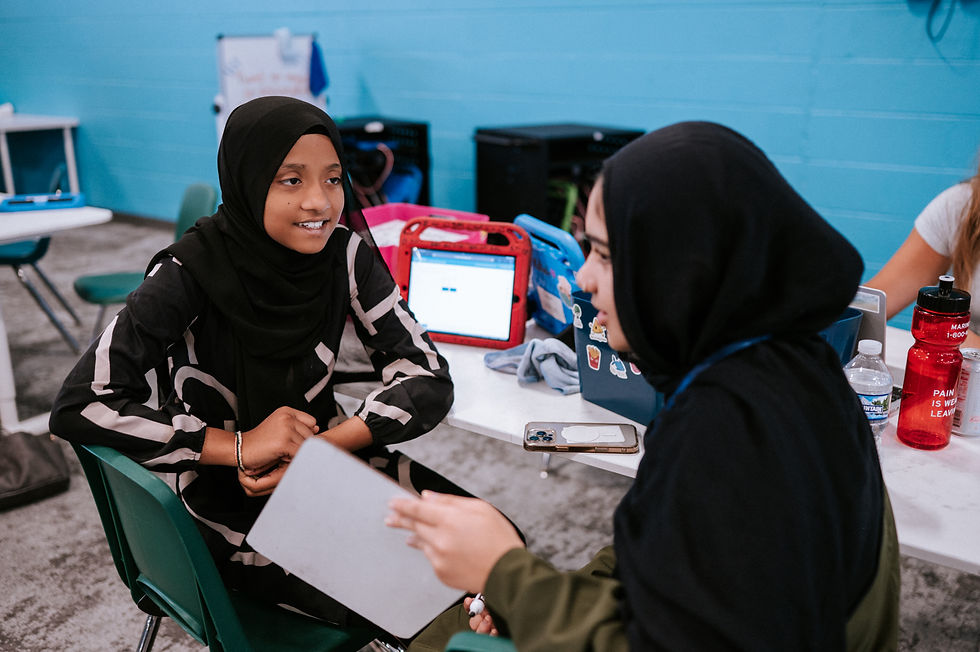
Education experts define chronic absenteeism as missing at least 10 percent of the school year, approximately 16 to 18 days, a threshold associated with long-term academic risk. Refugee students experience even higher rates of chronic absenteeism than their peers.
A study published by IZA Institute of Labor Economics in 2021 reported the rate of absenteeism for refugee students is more than double compared to native-born children.
Research from the Consortium confirms that absenteeism has a direct impact on learning outcomes. The more school students miss, the lower their grades tend to be; a relationship that is especially concerning in high school, where attendance goes hand in hand with graduation rates and postsecondary success.
The Consortium’s research highlights the importance of early intervention when attendance issues first emerge, as well as the role of family engagement and after-school programming in improving attendance. One of the study’s most striking findings is that school climate became even more strongly related to absenteeism after the pandemic than before.
“Attendance was higher in schools where students’ relationships with their peers and teachers were stronger,” the research brief states. “There is also evidence that the degree to which students find value and meaning in their classes influences their attendance.”
The study further concludes that “improving school climate is one of the most effective ways to improve student achievement and students’ long-term outcomes.”
Yet the research also makes clear that attendance challenges cannot always be addressed within the walls of a school building alone.
Be the reason another child catches up to grade level
and finds meaning in and beyond the classroom.
In addition to a wide range of strategies designed to engage and motivate students, FORA prioritizes creating stable and consistent relationships between students, tutors and Family School-Partnership (FSP) officers as a core part of its approach.
FORA uses High Impact Tutoring (HIT), a model that provides two hours of customized math, reading, and English tutoring a day in addition to support with students’ assigned homework.
By addressing foundational learning gaps caused by a lack of access to early and proper education, FORA works to reduce academic anxiety and provide students with an opportunity to grow their confidence, often leading to less dread around school attendance. Students attend daily 2:1 tutoring sessions, fostering both improved school performance and consistent, trusting relationships with adults.
FORA’s Family–School Partnership (FSP) program focuses on early intervention and close communication with families. Michael O’Connor, FORA’s co-founder and Managing Director, emphasised the importance of rapid response when students are absent.
“Parents often don't know that their kids have skipped school,” he said.
O’ Connor explained when absences occur, the most efficient way to address them is to contact a child’s family within 15 minutes of their absence and work together to determine the reason for the absence to avoid chronic absenteeism.
Besides rapid communication, O’Connor noted that FORA facilitates arranging transportation to and from school, attending medical appointments, and ensuring FSP officers fully understand why a student may be avoiding school.
In addition to logistical support and HIT, FORA offers programs that build students' confidence, connection, and a sense of belonging, factors that the Consortium links directly to attendance.
FORA’s Model UN program is available to students beginning in 4th grade and helps participants develop public speaking skills, writing, and critical thinking skills through debate and leadership exercises.
Similarly, FORA’s Robotics initiative provides a space for students to apply science and mathematics to hands-on projects.
These programs and tutoring methods offer students opportunities to engage in activities they may not feel comfortable accessing at school, reinforcing confidence and their sense of belonging.
Although FORA’s strategies support attendance for current students, many other refugee children often face higher barriers than their native born peers.
Both native-born and refugee families may lack access to the resources necessary to support consistent attendance. Transportation, food security, stable housing, physical and mental health care, and caregiving responsibilities can all affect whether students arrive at school consistently and prepared to learn.
Refugee students often face these same barriers while also navigating additional challenges. Language differences, limited or interrupted formal education, and social isolation can make school environments feel particularly overwhelming or unsafe.
O’Connor noted that refugee students are often placed in schools based on age rather than academic readiness, which can contribute to disengagement. “Many of our students feel like they’ve been left behind,” he said. “Some are ashamed, some are bullied, and many experience a deep sense of isolation.”
The research underscores a central conclusion: because students face a wide range of challenges both inside and outside of school, chronic absenteeism cannot be solved by school districts alone.
Improving attendance requires coordinated efforts that strengthen relationships, support families, and create environments where students feel safe, supported, and connected; a mission FORA is continually dedicated to achieving.
Join FORA now and invest in the power of education and equity.


Comments