
World Cup Stories: How Refugees Became World Cup Stars
BY: Pablo Roque, FORA Administrative Intern
Soccer stars Antonio Rudiger, Alphonso Davies, and Nestory Irankunda have made headlines in this year's FIFA 2026 World Cup, but many don’t know that they were once refugees. While players have to train tirelessly and commit years to the sport, these players
have faced additional obstacles in their lives because of their refugee status. Refugees spend their lives overcoming hurdles such as relocation, access to housing, education, and unjust politics. For stars Rudiger, Davies, and Irankunda, their lives have been marked by these struggles, making their road to the world cup that much longer.
Soccer can be a powerful outlet for players and fans alike. Here at FORA, students, staff, and community members have been brought together by a shared passion for the sport. The impact goes beyond high skill game play however, with the stories of refugee players having an additional impact on our community. For some, the barriers that these players have faced hit close to home, and allow students and families to see themselves in these great athletes.

Antonio Rudiger, who plays for Germany, comes from a family that fled from Sierra Leone after civil war broke out in the nation in the early 90’s. Rudiger, the youngest of six siblings, was one of the only children in his family to be born in their new home of Germany. In an article written for The Guardian, Rudiger stated how he’d speak to his older brother about the war and what he saw. His brother told him that their uncle would hide them “in a bag of rice” when there were risks in their journey. Soccer, which Rudiger picked up in his home of Neukolln, Berlin, was the thing that set him on the right path in life. To him, soccer is what kept him away from bad habits and he states that he will forever be grateful for the sport.

Alphonso Davies, representing Canada, one of the three host nations of the tournament, was born in a refugee camp in Ghana after “his parents fled Liberia, which, like Sierra Leone, was devastated by civil war during the 1990s and early 2000s.” Davies has stated that hearing stories from his parents as a child made him want to pursue a better life as he grew older. As soon as Davies touched the soccer ball as a kid, coaches immediately knew he had something special inside of him. At the age of just 15, he made his professional debut for the Vancouver Whitecaps in the Major League Soccer tournament and the rest is history.

Nestory Irankunda was born in a refugee camp in Kigoma, Tanzania, after his parents fled Burundi due to civil unrest. He spent most of his life growing up in Adelaide, Australia where he discovered his passion for soccer. For the World Cup, Irankunda was given the choice to either represent Tanzania, Burundi or Australia, ultimately choosing to represent Australia.
For him, Australia is “the country that welcomed his family, raised him, and provided him with the developmental tools to blossom into a professional athlete.” Irakunda, now one of Australia’s main stars, showed his skills in all four matches played in the cup, including a goal scored in Australia’s match against Turkiye.
For these players, the World Cup becomes an opportunity not just to show off their athletic abilities, but also to share their stories. Uplifting the voices of refugees allows for increased awareness of the types of barriers they face in society, and for refugees across the globe to see their own experiences reflected. Widely broadcasted, it also shows refugee children that they are more than just a word, and can achieve their dreams and goals with hard work and dedication.
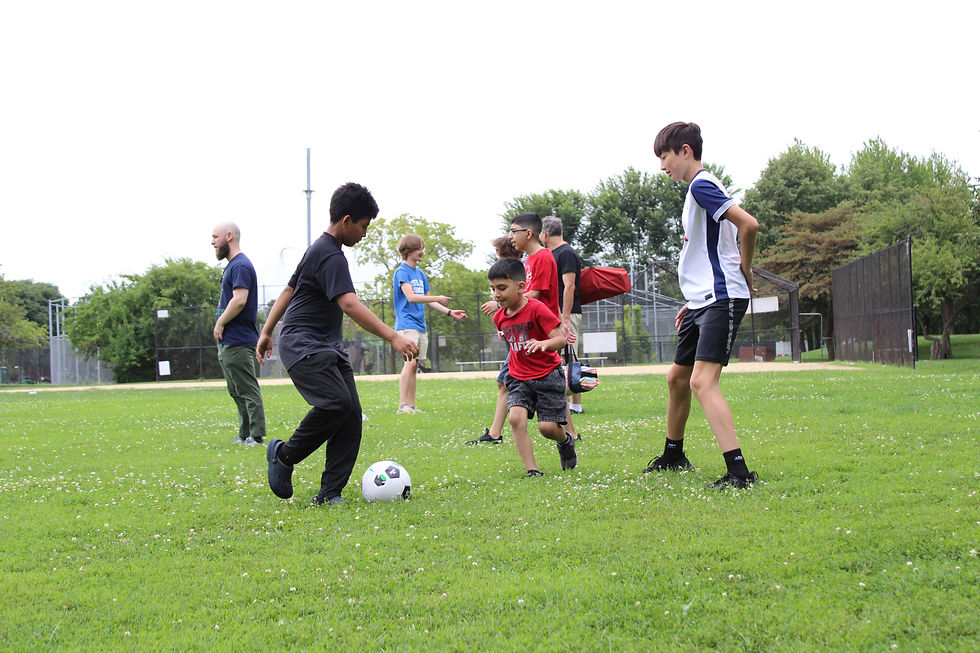
Over the course of the World Cup, students have been brought together by a shared passion for the sport. For many FORA students, soccer plays a role off their screen as well,
with many students participating in school and club teams, and filling their free time playing in the park with friends. Our students have been keeping close track of the entire tournament, cheering on their favorite teams and players. “I started playing soccer because of Ronaldo, that's why I support him,” stated a FORA student. For them, these players inspire them to work hard and chase after their own dreams.


Comments